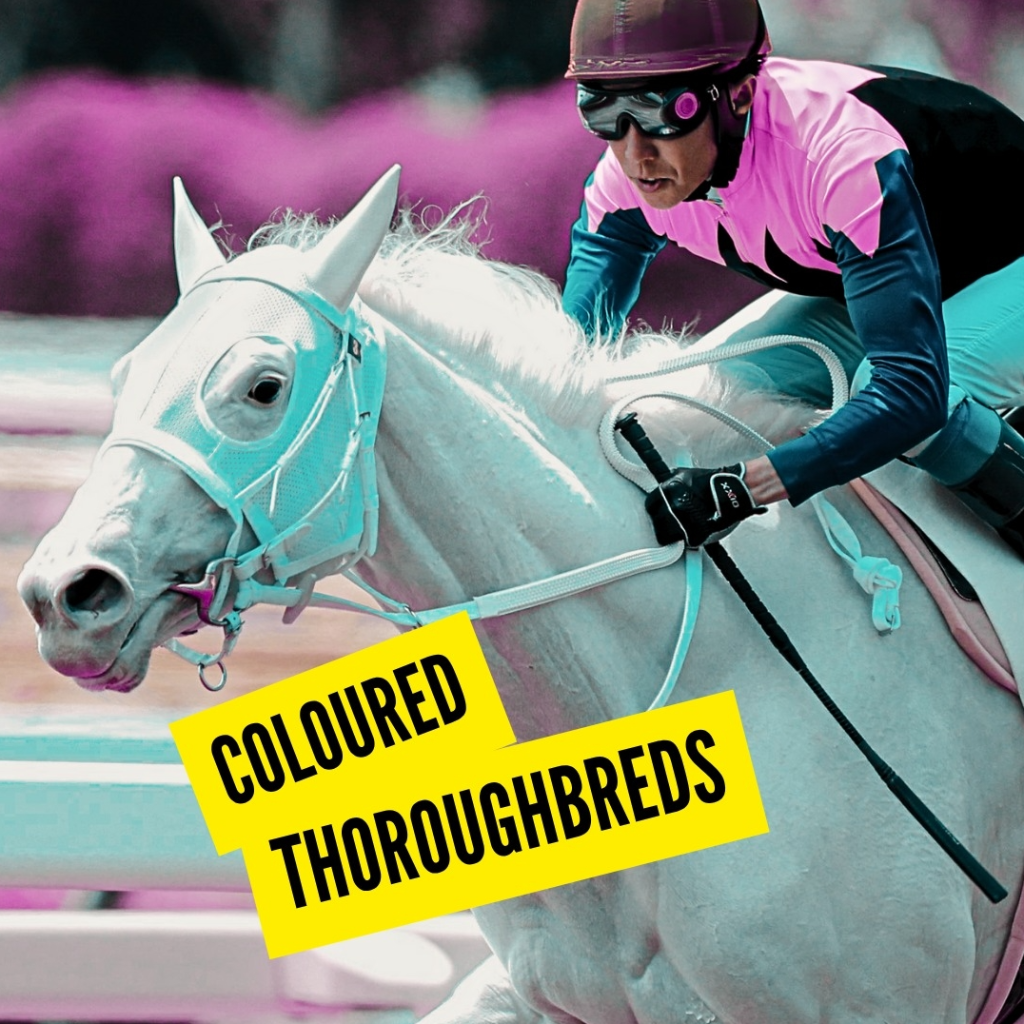
Yukinko
Sex
♀Female
Birth Year
2012
Land of Birth
🇯🇵
Status
Retired
Breeder
Funny Hill Farm
Race Record
14: 0-2-2 View full results
Raced in Japan between 2015 and 2016.
Now resides at Tsubasa Riding Club. Has no progeny records.
About: Gray
Gray is a coat color modifier that causes a horse’s coat to progressively lose pigment over time. Horses carrying the gray gene are born with a normal base color—such as black, bay, or chestnut—but gradually develop increasing amounts of white hair as they age. This process can produce many different appearances throughout the horse’s life, including steel gray, dapple gray, flea-bitten gray, and nearly white. Gray horses have dark skin and dark eyes. This is an important visual distinction from many white spotting mutations, which often produce areas of pink skin and sometimes lighter eyes. In the records of The Jockey Club, gray horses are often registered as “gray/roan,” particularly when they are young and show intermixed white hairs that resemble roan. This designation is inaccurate as true roan is genetically different and extremely rare in the Thoroughbred breed. Gray is caused by a mutation affecting pigment regulation associated with the STX17 gene and is inherited as a dominant trait. A horse carrying one copy of the gray gene has approximately a 50% chance of passing it to each offspring, while a horse with two copies will pass the gene to all of its offspring.
About: White spotting (KIT)
White spotting (previously known as dominant white) is one of several known depigmentation phenotypes in horses. It is the result of a spontaneous mutation of the KIT-gene which is why white foals tend to be a surprise when born to solid parents. White spotting patterns are highly variable in expression. They can range from minimal markings—sometimes described as sabino-like spotting—to horses that appear almost entirely white. White spotting mutations themselves do not affect eye color. As a result, horses with white spotting patterns usually have brown eyes unless another gene influencing eye color is also present. For many years, the sabino-like patterning seen in some heavily marked Thoroughbred horses was believed to be caused by the sabino allele Sb1. However, genetic testing has shown that Sb1 has not been identified in Thoroughbreds, and the white patterning observed in the breed is instead associated with other mutations (W) of the KIT gene. White spotting should not be confused with Lethal White Syndrome, which is caused by a different gene and occurs in frame overo horses. Likewise, white horses are not albinos, as true albinism has not been documented in horses. White spotting mutations are generally inherited as autosomal dominant or incomplete/semi-dominant traits. They require only one copy of the gene for expression, though homozygous horses often display more white (incomplete dominance) or, in some cases, the mutation is lethal.
Subtype: W?
This specific white spotting mutation has not been isolated yet or the horse hasn't been tested.

Sire
Admire Cozzene

Paternal Grandsire
Cozzene
Paternal Granddam
Admire McArdy
Maternal Grandsire
Miracle Admire
Maternal Granddam
Black Russian